
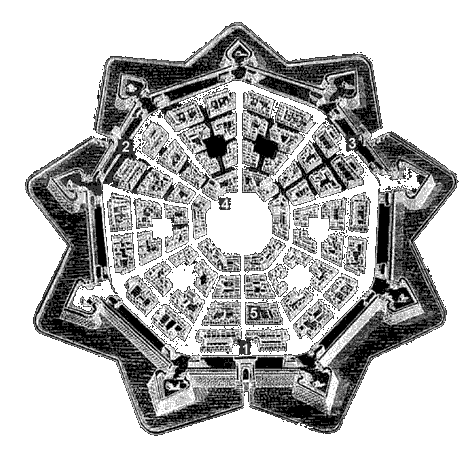
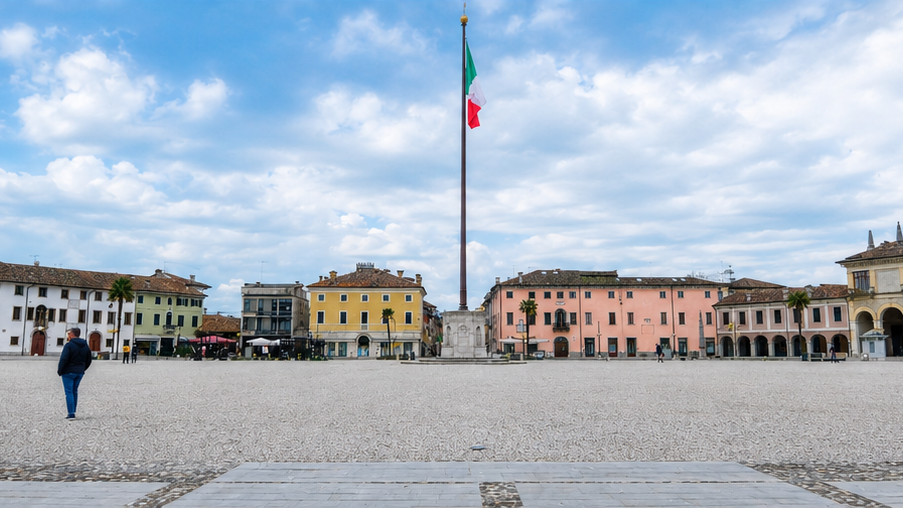
Three perfectly straight main streets cut across the star-shaped bastion; four concentric streets surround the city center; six square-shaped plazas lie in front of the center, which is formed by a hexagonal plaza. This description
alone makes it clear: Palmanova was designed on the drawing board. For over two centuries, it was renowned as the best-fortified stronghold in Europe.
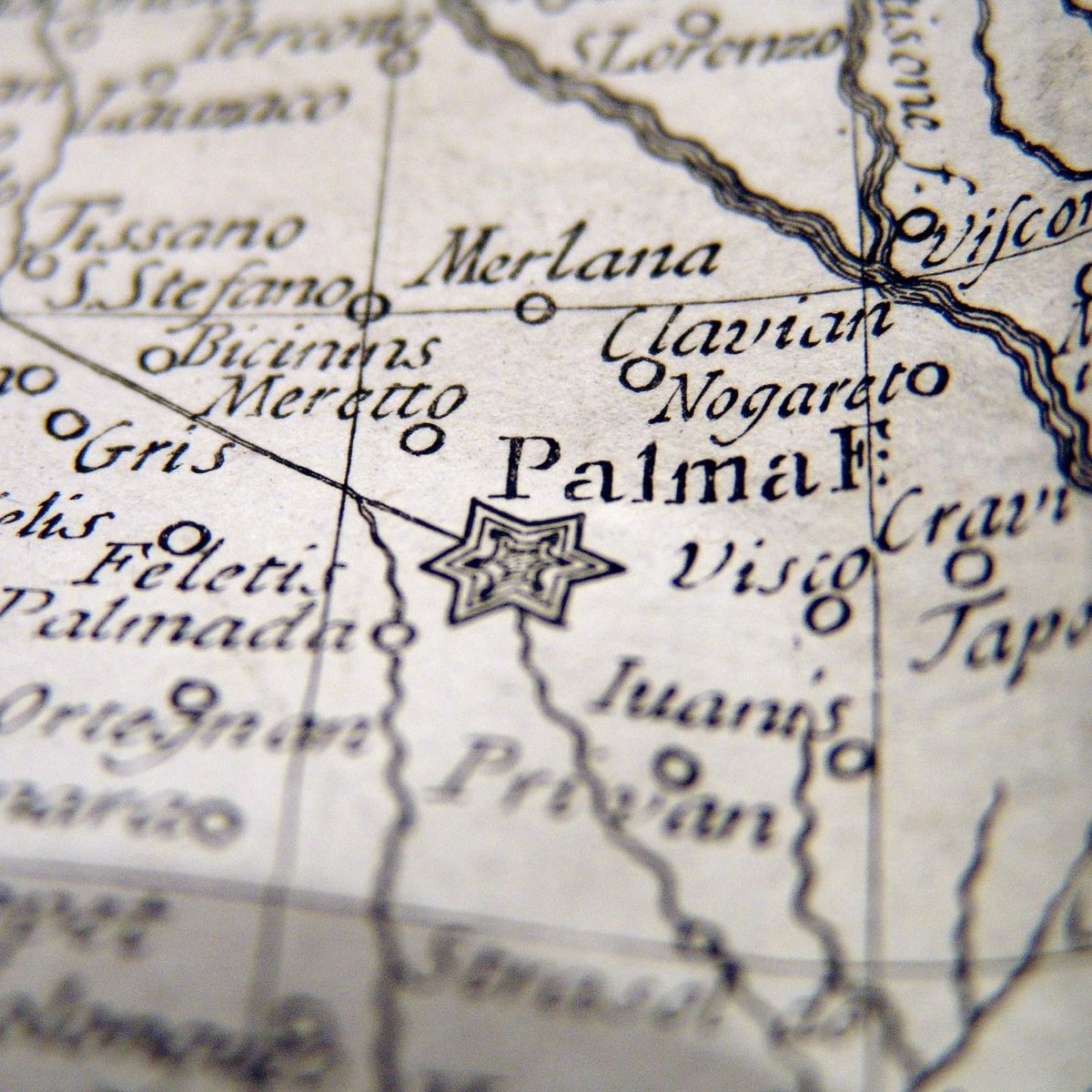
Starting in 1593, the Venetians spent about a hundred years building the city, which was intended to serve as a fortress that would remain impregnable to the Austrians and Turks for all time.
Palmanova was designed for 20,000 people, yet no one ever wanted to live in this model city. Consequently, it was inhabited only by soldiers stationed there. Barely 30 years after the cornerstone was laid, Venice was already forced to rely on convicts, who were granted freedom and a place to live if they were only willing to settle in the city.

Palmanova is under threat.
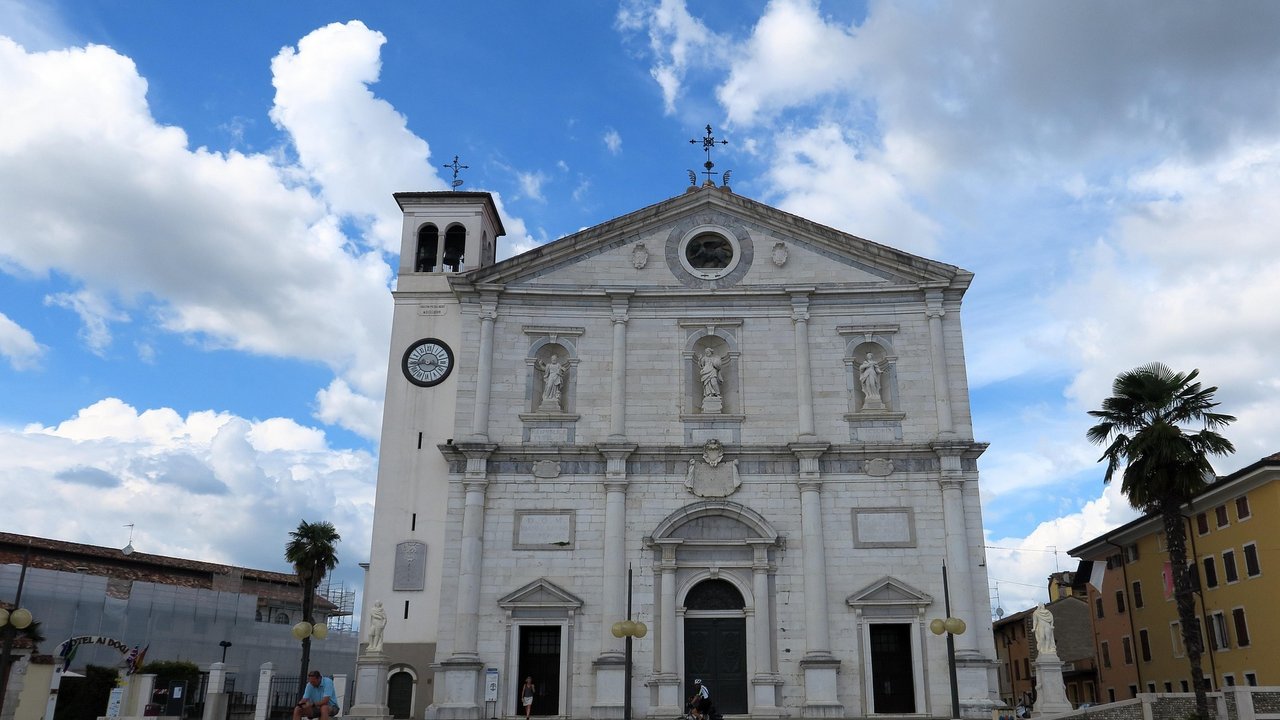
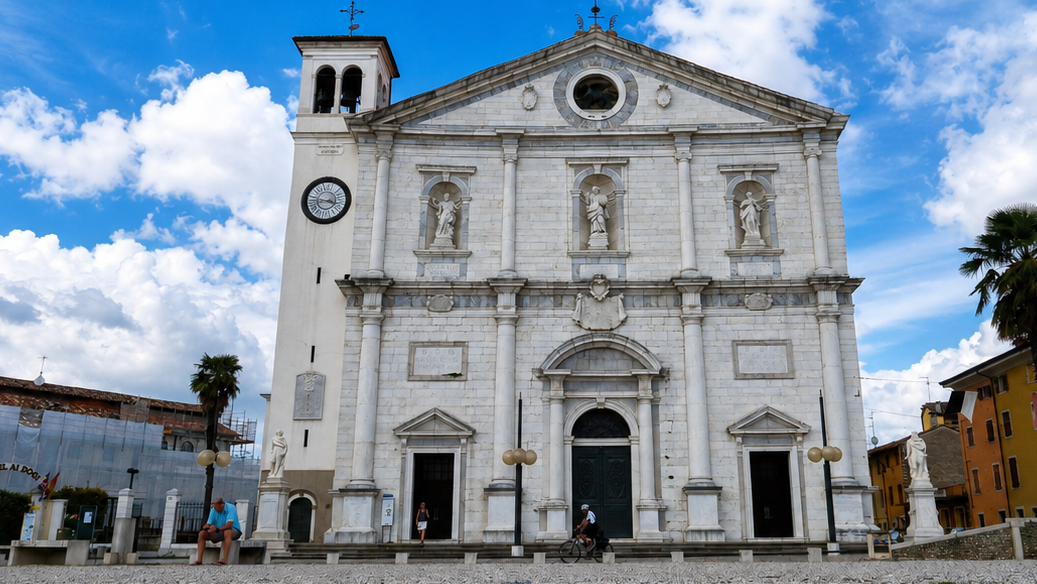
The Doge's Cathedral
in Palmanova
It is the city's most important church, built in the first half of the 17th century. The building reflects the Venetian architectural style with Palladian influences. The interior has a more Baroque feel.
The two-part façade features niches with statues of the Savior, Saint Mark, and Saint Justina (to whom the cathedral is dedicated).
The façade was recently renovated, which has beautifully enhanced the interplay of colors between the white stone (from Vrsar) and the gray stone (from Aurisina).
The interior is adorned with frescoes, among which the "Pala delle Milizie" (Altar of the Militias) by Alessandro Varotari - also known as Il Padovanino - from 1641 is particularly noteworthy. Also worth seeing are the works by Pomponio Amalteo and the small wooden Madonna attributed to Domenico of Tolmezzo.
Despite certain privileges, Palmanova rarely had more than 2,000 residents. Even today, the town has no more than 5,000 inhabitants.
The ingenious system of inner and outer fortifications, secret passageways, powder magazines, and barracks is truly fascinating, especially given how peaceful it is today.
An irony of history: There were never any military conflicts in Palmanova itself; the city was taken without a fight by Napoleon in 1797.