
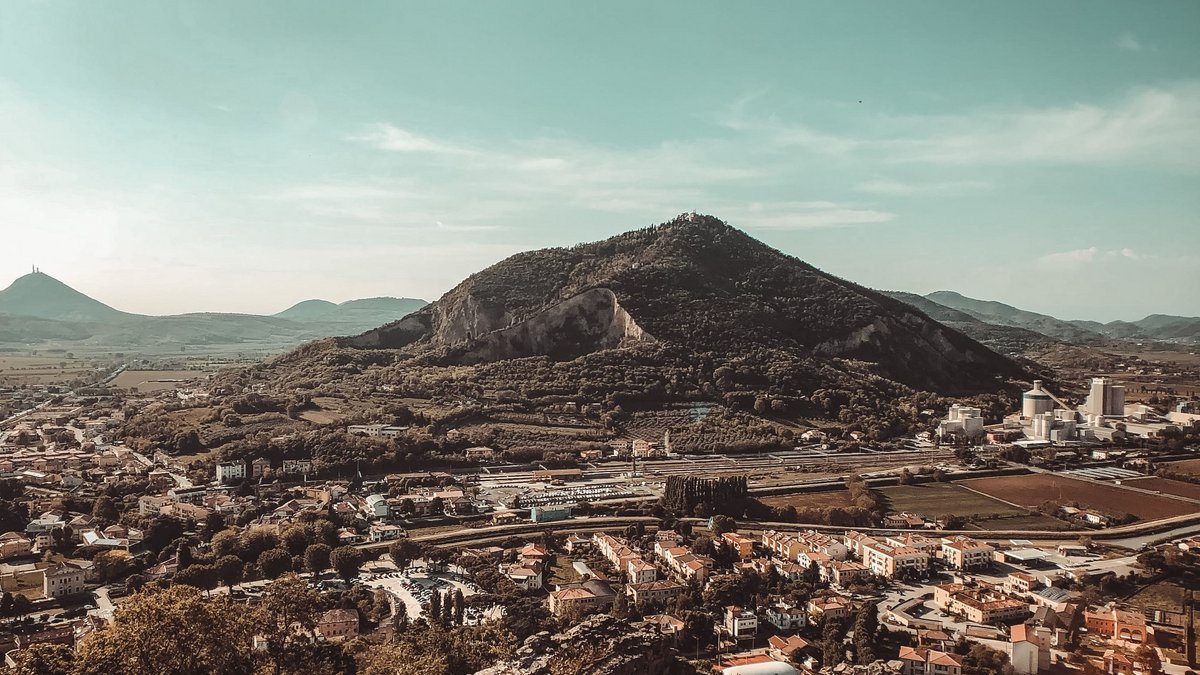
View from the fortress toward Montericco / Euganean Hills
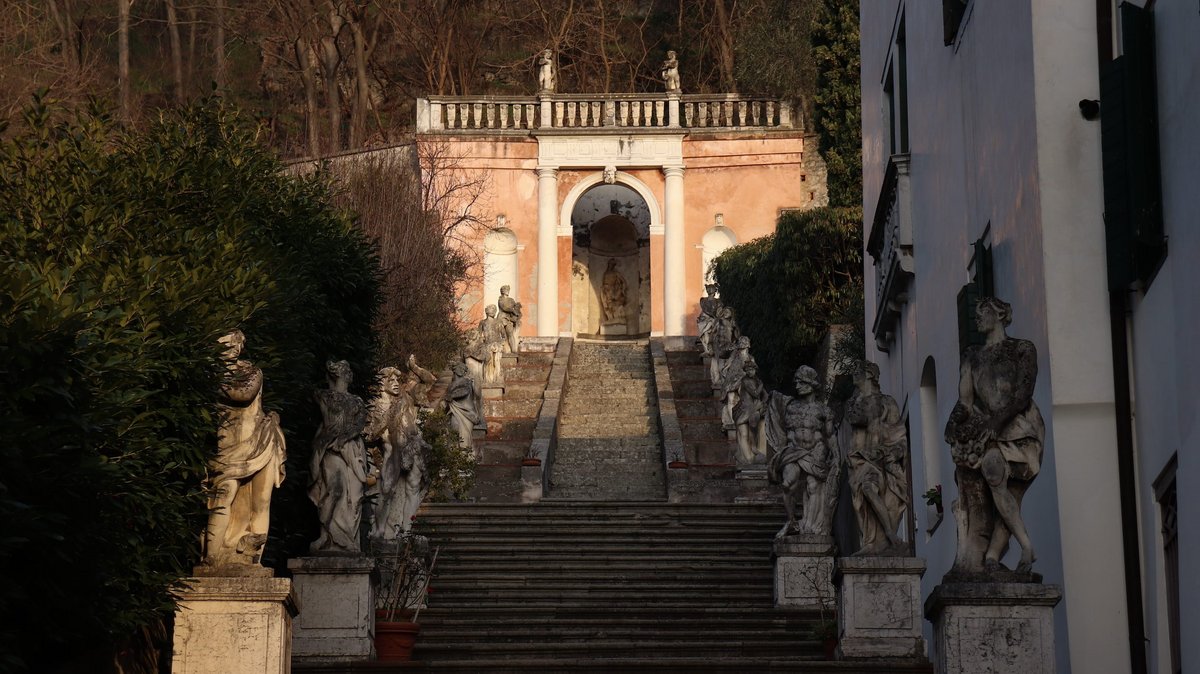
Villa Nani Mocenigo
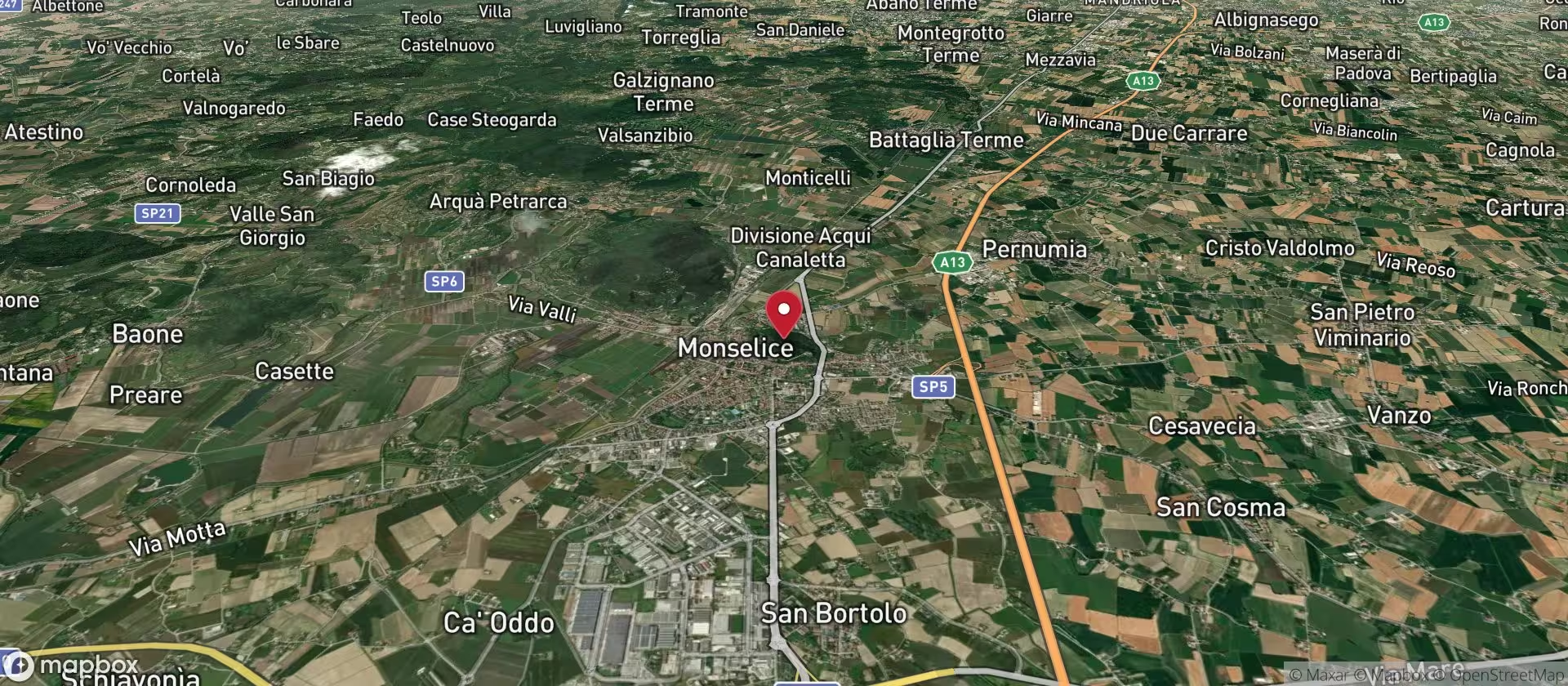
The small town of Monselice is located 20 km southeast of Padova on the edge of the Euganean Hills. It's not hard to find, partly because it has its own highway exit, and partly because the Rocca (the steep, rocky hill with a fortress at the foot of which Monselice lies, and which serves as a good landmark) has a rather distinctive silhouette.
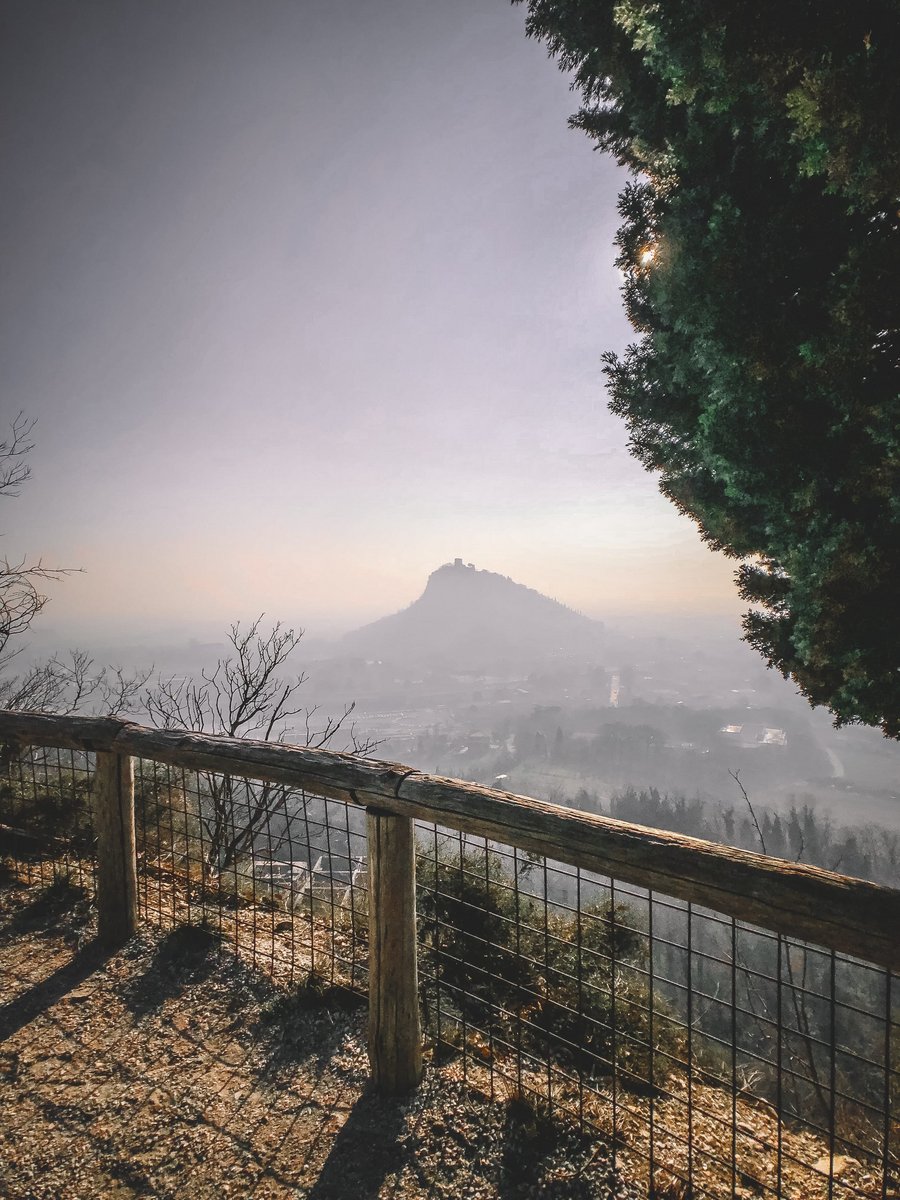
View of the Rocca from Montericco
The Legendary Town of Monselice
Like so many other iconic landmarks, Monselice - nestled between Rocca (110 m) and Montericco (312 m) - has been continuously inhabited since the Bronze Age.
According to legend, the town was founded by the Trojan hero Opsicella (a companion of Antenor, who, according to Homer, was the wisest of the elderly Trojans).
Monselice has always been regarded as a special place. In the Middle Ages, the idea of it being a place of spiritual ascent took shape: the path leading up to the castle and the churches represents a journey of initiation - from below (the secular) to above (the sacred) - which closely mirrors older, pre-Christian concepts of the world mountain (axis mundi), which connects heaven and earth.
After all, it is true: up on the mountain, one is simply closer to heaven than in the valley. And so the Path of the 7 Churches developed into a substitute pilgrimage.
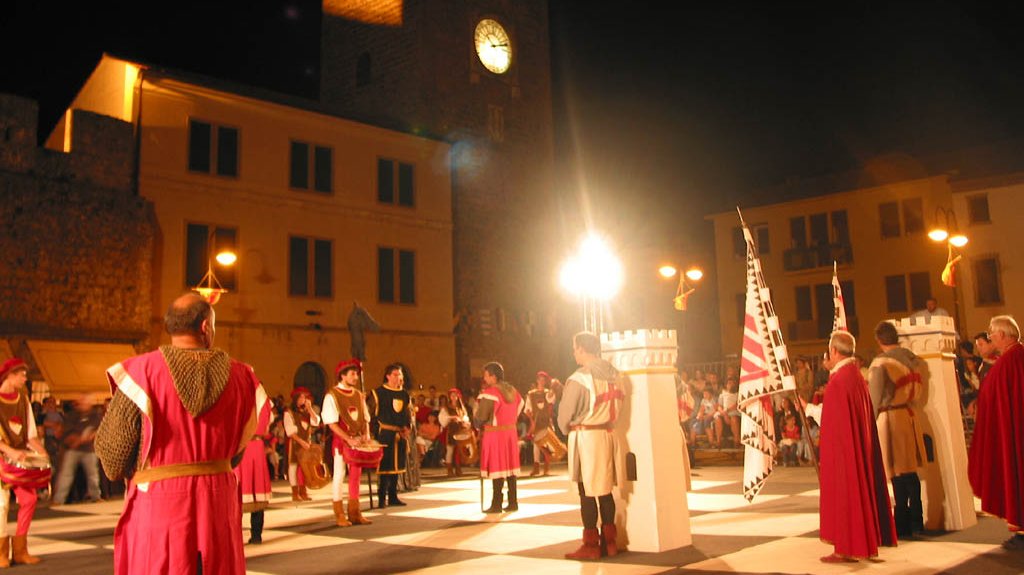
Palio di Monselice
Monselice / Euganean Hills
For several years now, the Palio di Monselice has been held in September; modeled after medieval jousting tournaments, it also features a medieval parade in historical costumes.
Any similarities to the Living Chess of Marostica are, of course, purely coincidental, but the Palio di Monselice, which lasts for several weeks, has one advantage: it takes place every year.
Sights
in Monselice
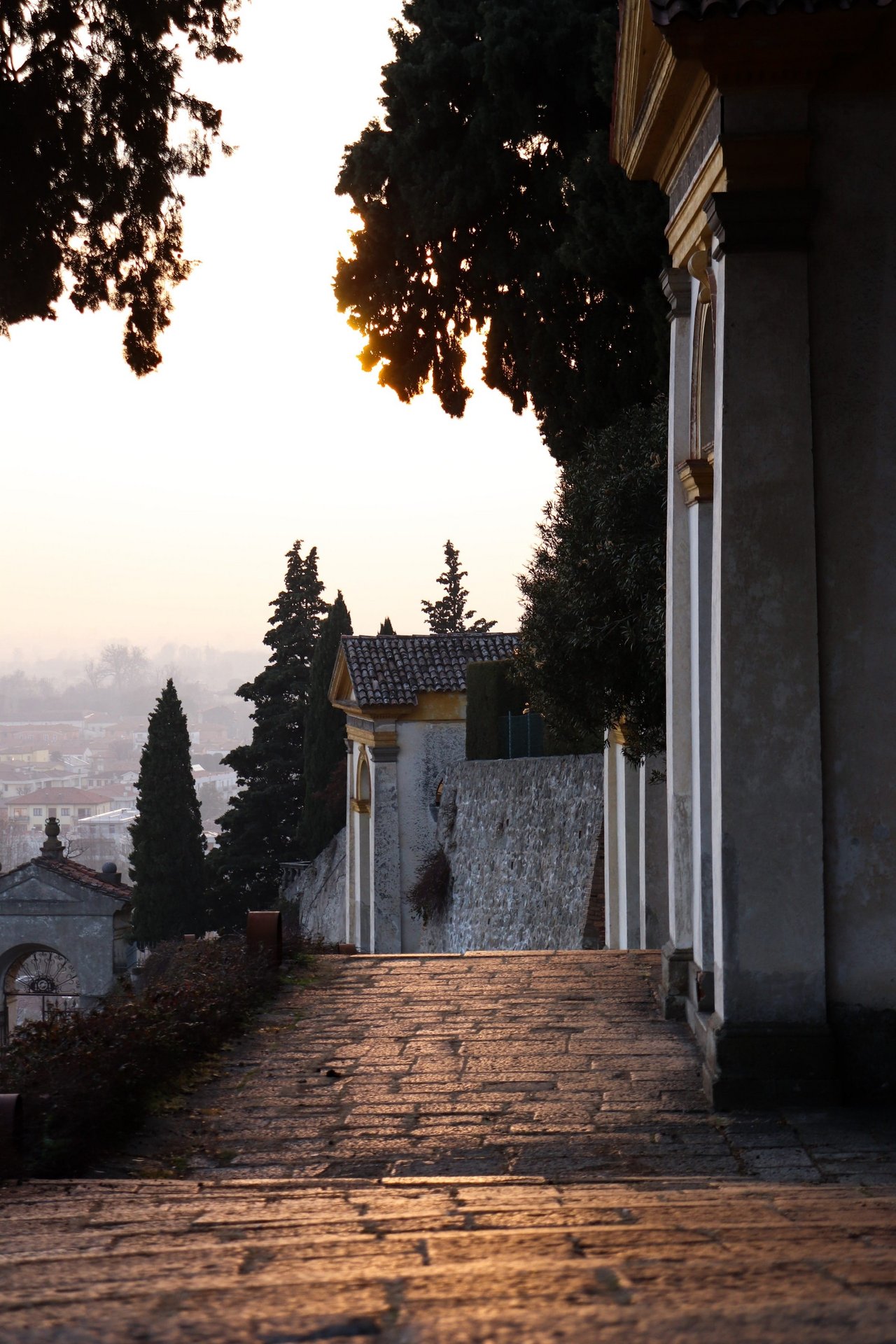
The Santuario Giubilare delle Sette Chiese is the name given to the monumental complex of religious buildings that line the path leading up to Villa Duodo. It consists of six chapels along the path, which represents the Holy City in miniature.
In 1605, the Venetian nobleman Pietro Duodo, who clearly had connections in high places, received permission for this from Pope Paul V. At the same time, he was also granted the same privilege enjoyed by the seven Roman basilicas: the privilege of a plenary indulgence (as the saying goes: "As soon as the money clinks in the box, the soul leaps out of Purgatory"). A lucrative venture, then!
But this also explains the inscription Romanis Basilicis Pares ("equal to the Roman basilicas") above the gate through which one enters.
Thus, the complex was designed by the architect Vincenzo Scamozzi, and the six chapels were each decorated with a painting by Palma il Giovane depicting the Roman basilicas.
The seventh church - that of St. George - was built specifically to house the remains of three martyrs as well as numerous relics that were brought from Rome especially for this purpose. As the number of relics grew, the Duodo family erected a separate shrine next door, to which the martyrs were transferred.
The end of the path marks the destination - Villa Duodo:
Villa Duodo stands at the point where Via del Santuario ends. It enjoys a privileged and exceptionally picturesque location, offering a magnificent view across the plain.
Villa Duodo was also designed by Scamozzi and initially consisted of only one wing (the southern one), until 1740, when the second, much more imposing wing (designed by architect Andrea Tirali) was added at a right angle to the left wing.
The villa itself is not open to the public, as it is used by the University of Padova for events.
So we'll leave the villa to our right and continue up the path to the
Mastio Federiciano
Monselice / Euganean Hills
The Mastio Federiciano, also known as the Rocca di Monselice, is the fortress visible from afar atop Colle della Rocca, which overlooks Monselice. It was commissioned by Frederick II, known as "Stupor Mundi," and its construction was carried out under Ezzelino III da Romano, lord of the Marca Trevigiana.
The fortress, with a square floor plan, is surrounded by five rings of walls, the oldest of which date back to the 6th century. For its time, it was a virtually impregnable structure.
As medieval weaponry evolved, the fortress eventually became obsolete and was ultimately abandoned.
The tower houses a museum with artifacts from the early Middle Ages.
The tower's address for your GPS: Via Galilei Galileo, 3 - Monselice
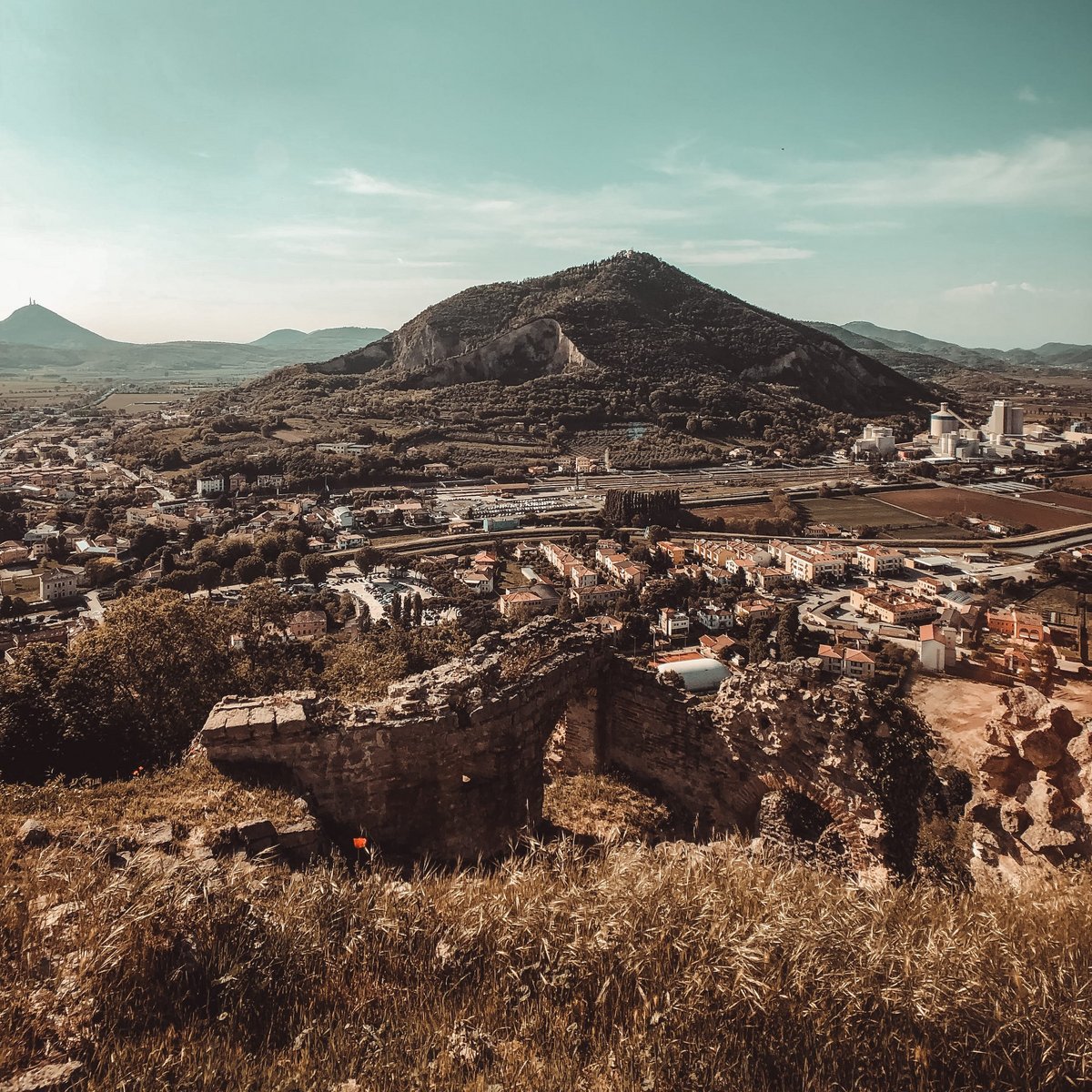
As you may have already seen from some of the photos, Monselice is an excellent starting point for exploring the Euganean Hills - on foot or by bike.
The magical landscape of the Euganean Hills makes the trip more than worth it.