
The truth is, however, that "rapus" means "grape" in Latin, from which the word "grappa" eventually evolved in common parlance. But whatever the case may be, only fruit brandy made from "trebbie" - produced from dry, pressed grapes, a byproduct of winemaking - from Italy is allowed to be called grappa. About 40% of all grappa is produced in the area around Vicenza and Monte del Grappa (from which the suffix "Bassanos" is derived).

Grappabar on the left
Photo creditBy the way, it's worth taking a quick detour to one of the local distilleries, where a good bottle of grappa costs about half the price charged for it in Germany or Austria.
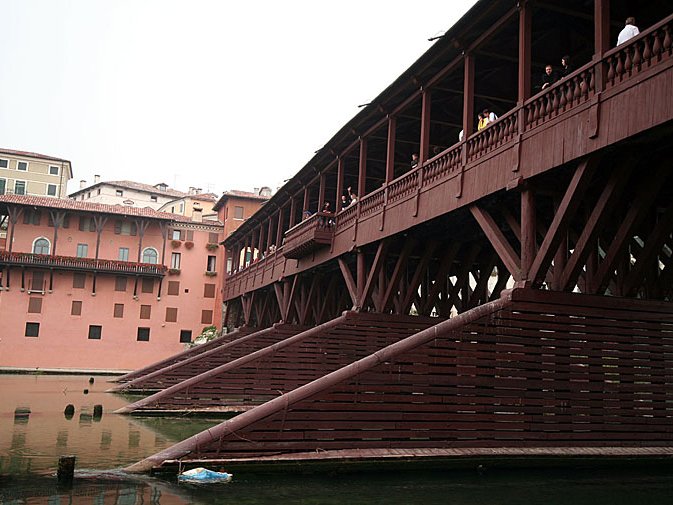
If you want to enjoy grappa the proper way, the best place to do so is at the Osteria del Ponte, right next to the wooden bridge over the Brenta River - a sight you can't miss.
Anyone wishing to continue following the trail of grappa from Veneto should head east to Friuli, Italy's second-most important grappa region.
The fact that excellent wines have been produced there for thousands of years was, in a sense, the region's undoing even in Roman times: Julius Caesar was, after all, a wine lover.
And so it wasn't long before Friuli was incorporated into the Roman Empire.
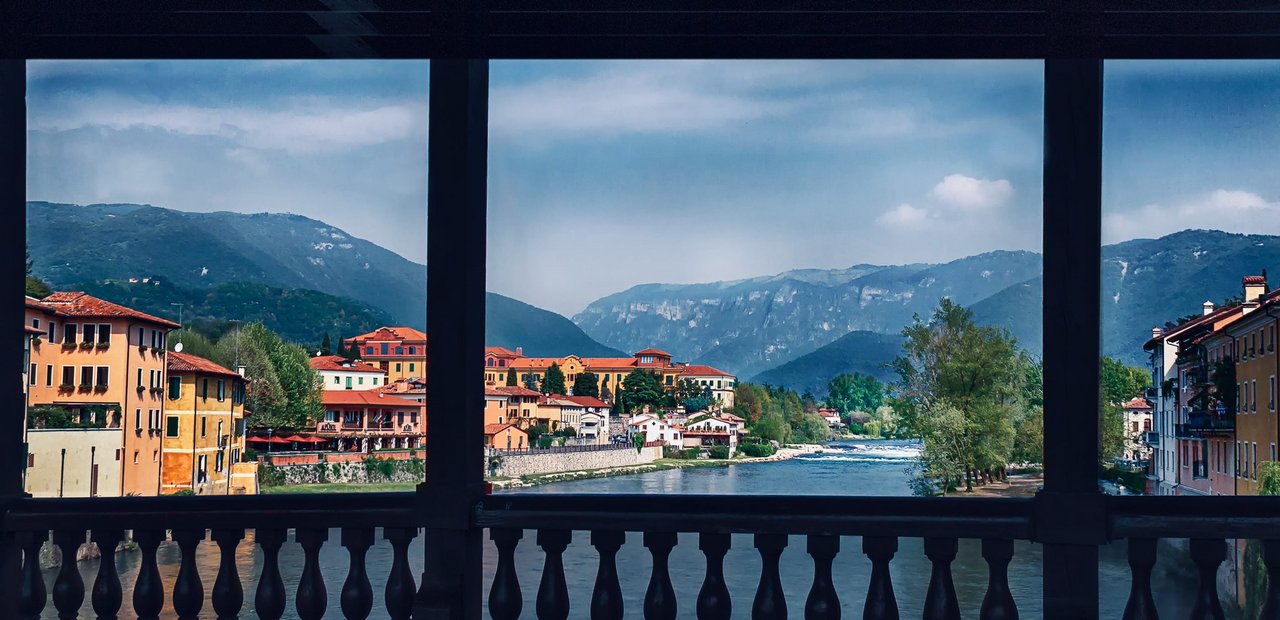
View from the Ponte Vecchio
Ponte Vecchio
by Andrea Palladio
The rightly famous bridge was built in 1569 according to plans by Andrea Palladio, to whom the region owes some of its most famous villas. These include such magnificent architectural monuments as Villa Rotonda (where, among other things, Mozart's opera *Don Giovanni* was filmed).
The Ponte Vecchio (also known as the Ponte degli Alpini) is a covered arch bridge with a covered roadway, allowing one to cross the Brenta River without getting wet. Because Bassano lies on the strategically important trade route to Vicenza, the bridge was damaged or even completely destroyed several times during various wars, but was always rebuilt according to Palladio's original plans.