
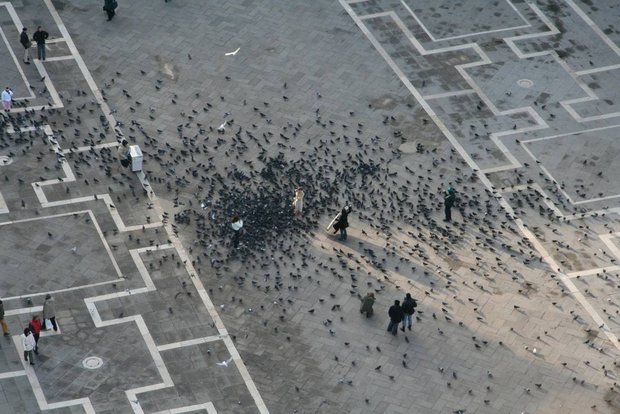
Pigeons in St. Mark's Square
Venice and the Pigeons
St. Mark's Square without pigeons - unthinkable! Thousands of them delight visitors and licensed pigeon feed vendors every day - though not always the locals:
Gone are the days when, like the Venetian Patriarch Angelo Roncalli (later Pope John XXIII), one could have a pigeon sent straight from St. Mark's Square to the cooking pot to be made into delicious pigeon soup with bread crust, a typical Venetian specialty. Salmonella and mites are the main reasons for this. Outside St. Mark's Square, there is a strict ban on feeding the pigeons, which, fortunately, almost everyone adheres to.
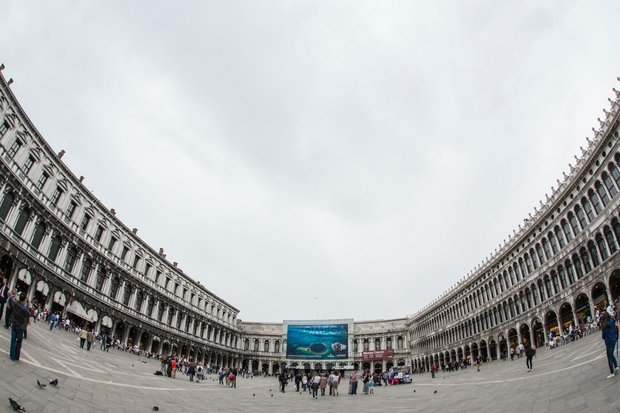
In the year 1000, St. Mark's Square was still a vegetable garden. It wasn't until the 12th century that it took on its present dimensions. The square was surrounded by houses and palaces and was paved. The Piazzetta was created, with its marble edge and two massive oriental granite columns, atop which the Lion of St. Mark and St. Theodore were later placed.
During the Renaissance, the Old Procuraties and the bell tower were built on its right side to serve as a defensive structure and lighthouse. In the 16th century, V. Scamozzi built the New Procuraties on the left side. Under Napoleon in the 19th century, the Procuratie Novissime were erected opposite St. Mark's Basilica, which crowns the square, in place of the Church of S. Geminiano.
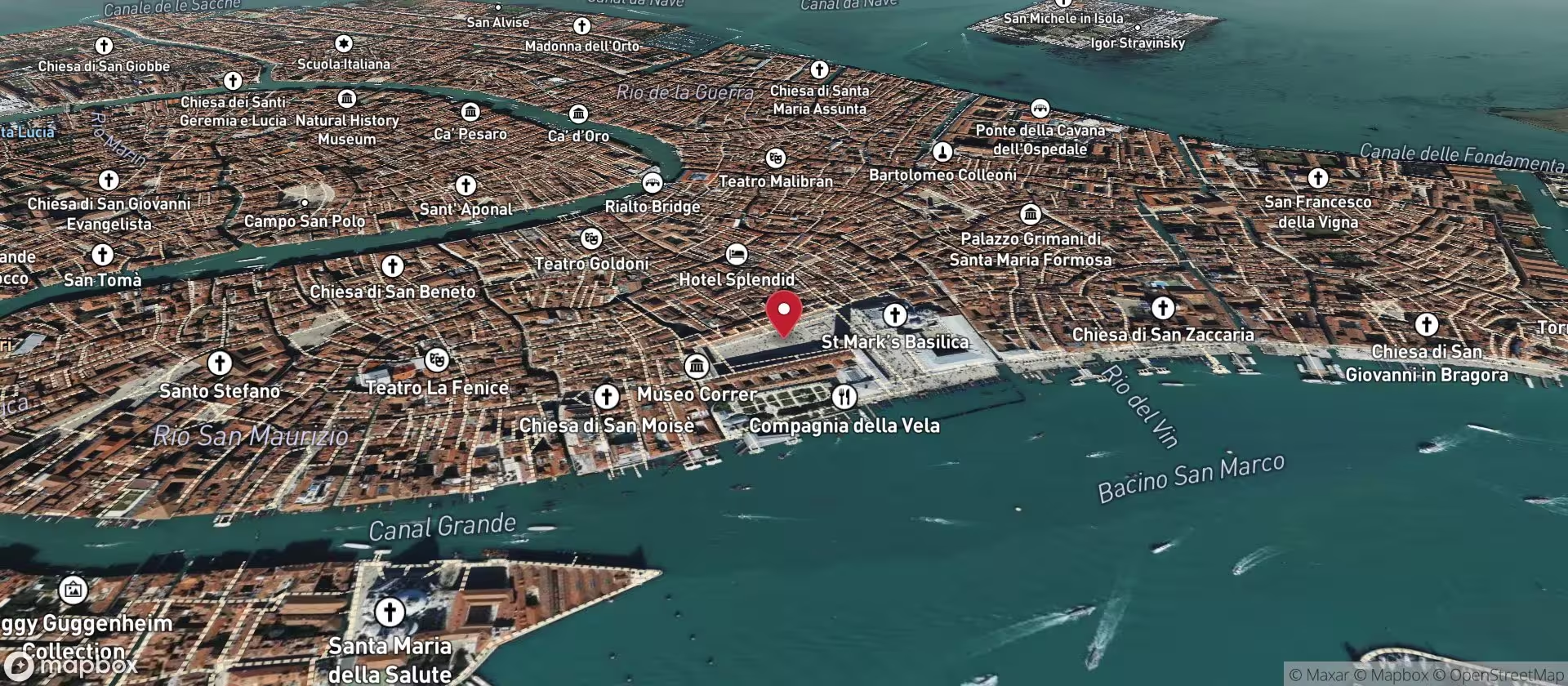
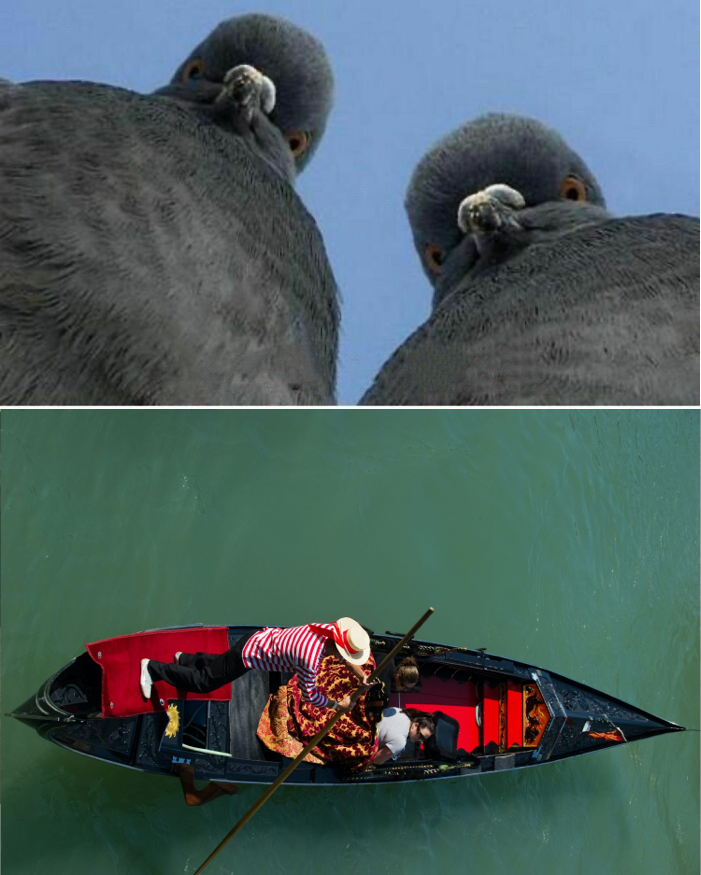
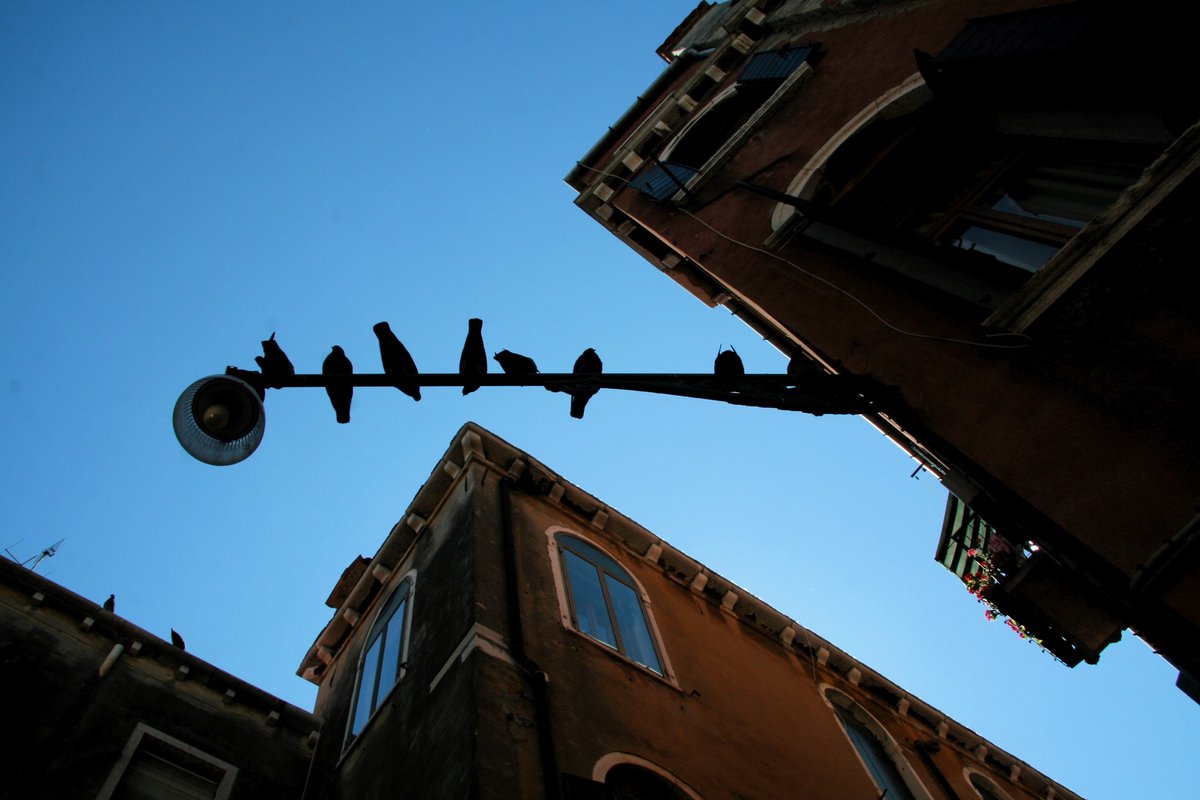
Extra caution is advised.
Why pigeons, of all things?
Spoiler: they're delicious!
According to tradition, after his spectacular conquest of Constantinople during the Fourth Crusade in 1204, the old Doge Enrico Dandolo sent a pigeon to Venice bearing the joyful news of victory. The pigeon easily flew the 1,300 kilometers and, along with its fellow pigeons, has been beloved by the Venetians ever since.
And the fact that there are so many of them in Venice can be explained by the fact that the Venetians took their love of pigeons so far as to release entire flocks of pigeons every year on Palm Sunday - a custom that, unlike other folk festivals, the lagoon dwellers have wisely not revived in recent decades.