
After all, the campanile provides the shade where Venetians love to enjoy a quick glass of wine - or two. It's no coincidence that in the Venetian dialect, the phrase is *bere un'ombra* (literally, "to drink a shadow"). From this perspective, there's plenty to celebrate, as there are numerous church towers throughout the Veneto region.
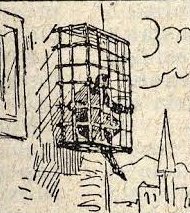
No view of the sea. Things weren't as comfortable in Venice as they were here - the cages hung inward.
The Campanile has been used in a variety of ways. In a sense, it is an allegorical reflection of life in Venice.
At times, it even served as an instrument of torture for members of the clergy who had committed some offense.
The punishment known as "suplissio dea cheba" involved suspending a cage containing the condemned inside the Campanile and leaving the offenders to rot inside.
Rumors that this tradition has been maintained and merely replaced by a modern elevator with high admission prices are completely unfounded.
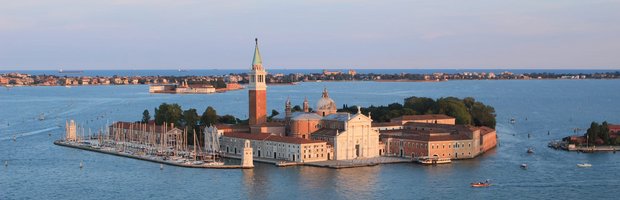
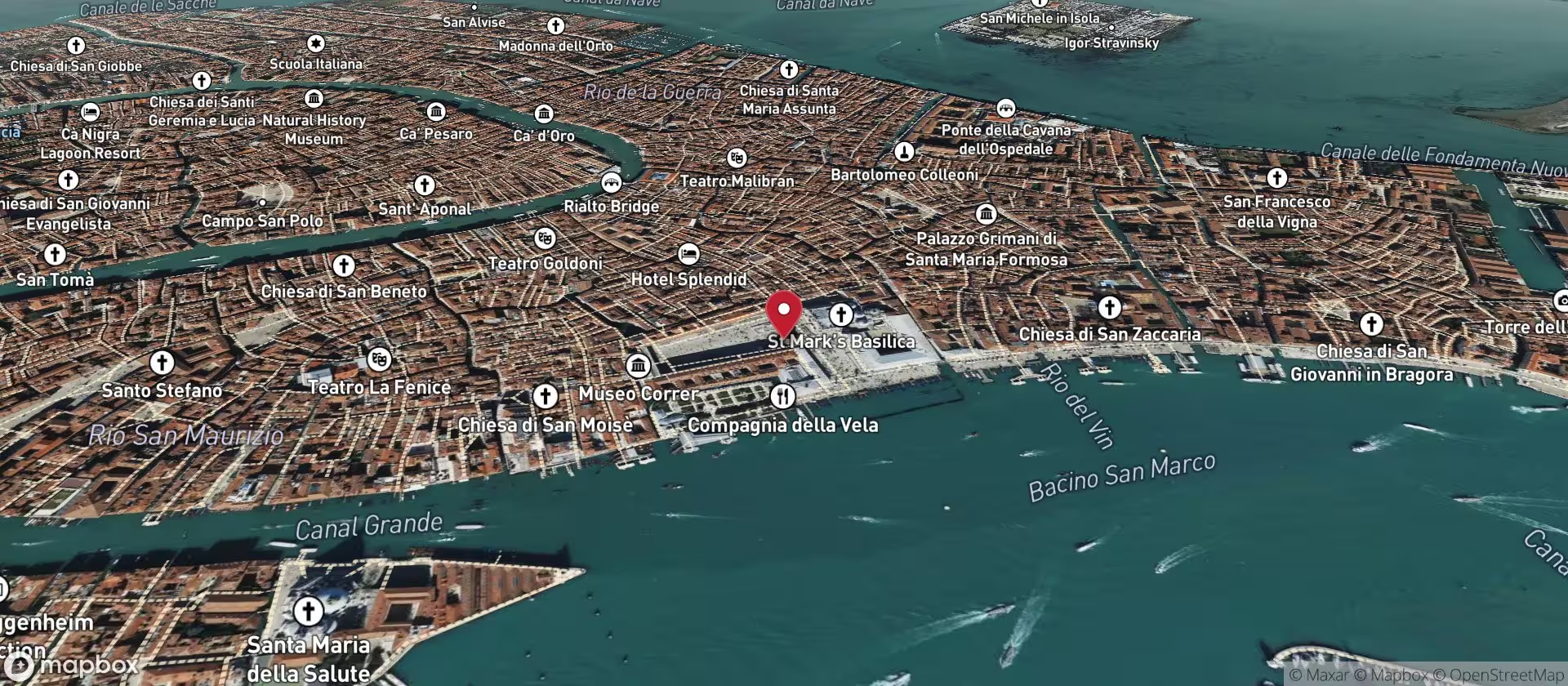
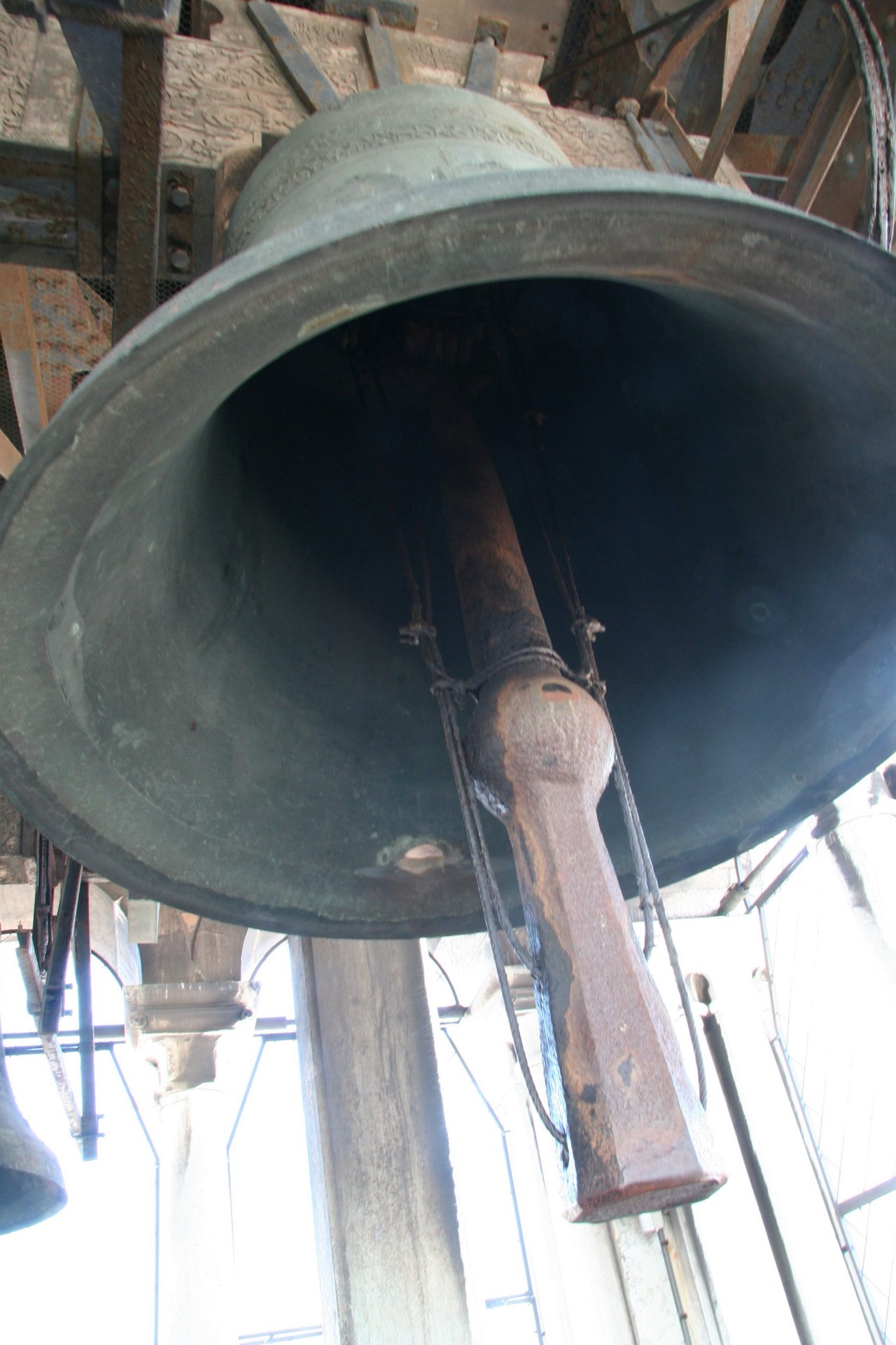
La Marangona
5 bells
Just as the Pummerin is to the Viennese, so is the Marangona to the Venetians. A total of five bells survived the collapse of the campanile in 1902:
- La Marangona
Rings twice daily, once at noon and once at midnight. It is named after the marangoni, the carpenters, who naturally held special significance in Venice in connection with shipbuilding.
And also during Carnival: The Marangona rings in the end of the festivities. - Il Maleficio
Was rung for executions (nowadays rather rare) - La Trottiera
Rang to summon the magistrate to the Doge's Palace. - La Nona
Was rung at the ninth hour. - Il Pregadi
Announced Senate meetings.
Above the bell chamber is a cube whose sides alternately display two moving lions and the female figures of Venice. The top is crowned with a gilded statue of the Archangel Gabriel (created by Luigi Zandomeneghi).
It was this very campanile that Emperor Frederick III rode up the stairs on his white horse following a reception with the Doge (at that time, the tower still had a spiral staircase), so that he could look down on the Doge from there. Anyone familiar with the Doge's Palace knows that the only staircases leading up from its inner courtyard are those leading to the Doge. For Frederick, this was likely a rather inappropriate symbolism, so he set things right again by riding up the Campanile.
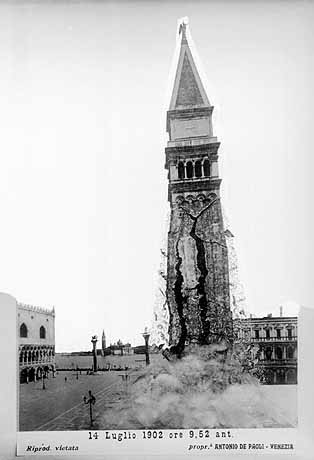
On July 13, 1902, it happened: Cracks suddenly appeared in the masonry of the central section. The area was cordoned off as a precautionary measure. On July 14, the Campanile collapsed. Miraculously, neither people nor the surrounding buildings were harmed.
By a stroke of luck - considering the camera technology of the time - there is actually a photograph of the Campanile collapsing in 1902.

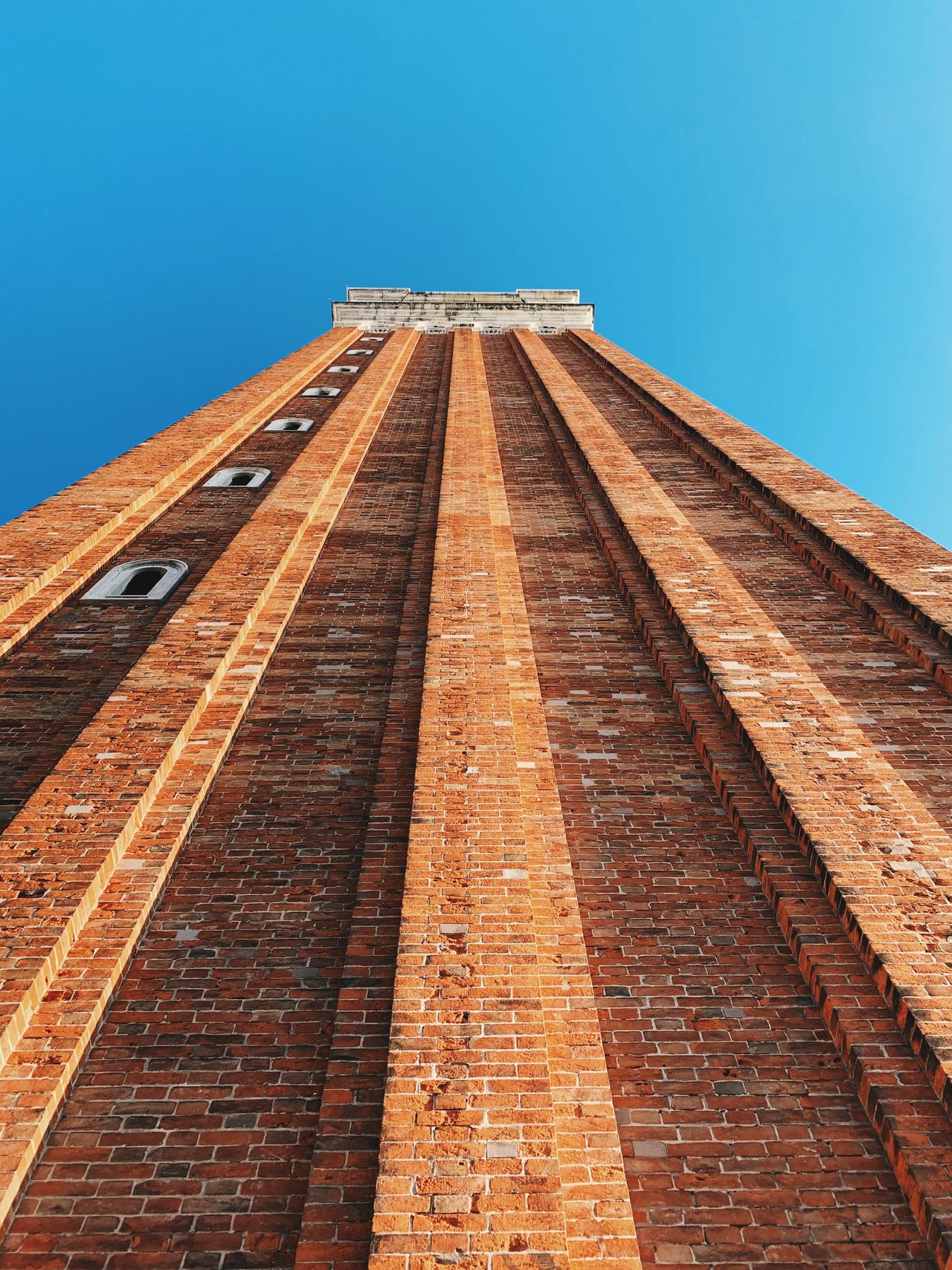
As good as new.
Among others, a wealthy American donated half a million gold lire (~1 million euros) toward the reconstruction of the collapsed tower. On April 25, 1912 - the same day the foundation stone of the original tower was laid in 912 - it was ceremoniously re-inaugurated, featuring a visionary addition: an elevator.