
In Italy, it's customary to pay the so-called "coperto" instead of a tip. The price is usually listed on the menu and isn't exorbitant.
If you see a restaurant advertising that it doesn't charge a coperto - keep walking; there's nothing to see here, let alone eat.
Because the food there is usually significantly more expensive than elsewhere.
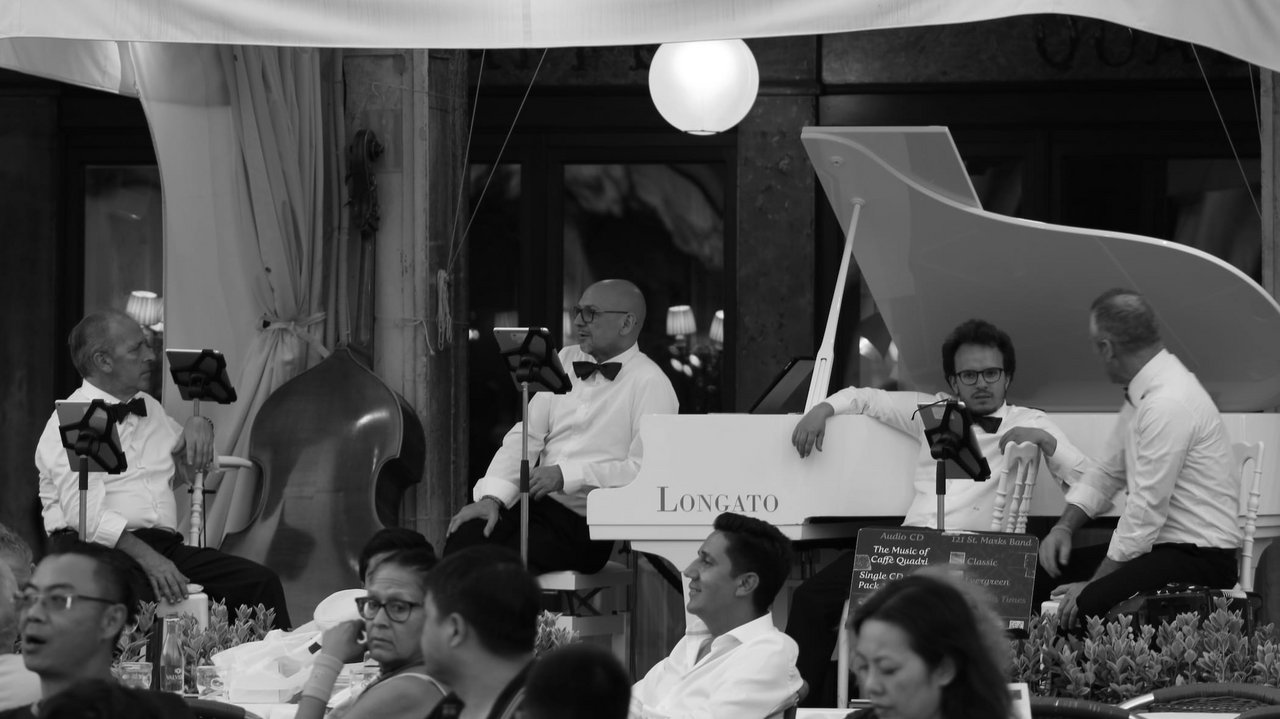
If you'd like to sit down for a coffee or a glass of Prosecco in St. Mark's Square - at Café Florian, for example: You'll also find a tip - not always a modest one - on the bill for the band that's currently playing. Not that you should be outraged by this, but it's good to know beforehand.
Since Venice is constantly thinking of ways to squeeze even more euros out of tourists - and does so with remarkable creativity - they've come up with the following idea: pecunia non olet.
The WC Card costs €3 per day and entitles the holder to use public restrooms.
So here's a tip: Walk into any bar and simply enjoy an espresso. That way, a trip to the restroom is included.
To Venice's defense, however, it should be noted that of the 20 million tourists who visit this unique city each year, only 5 million stay longer than a day!
Businesses that specialize in mass tourism (e.g., restaurants) often hire a "door-opener," the exact opposite of a bouncer. Their job is to approach passersby and encourage them to visit the establishment.
The same goes for when you arrive by car; you'll notice people waving cheerfully from the roadside. They want you to park your car with them (though they're happy to leave out the fact that this parking lot is farther away than the others).
You can safely ignore people like this and save yourself a lot of money.
In a world of automation, we appreciate every item crafted by people who are passionate about their work.
Just a short distance from Rialto (on the side of the fish market) is the workshop of Gabriele Gmeiner, arguably Venice's most exclusive shoemaker.
Anyone who truly loves shoes and handmade items won't mind waiting a few months for them.