
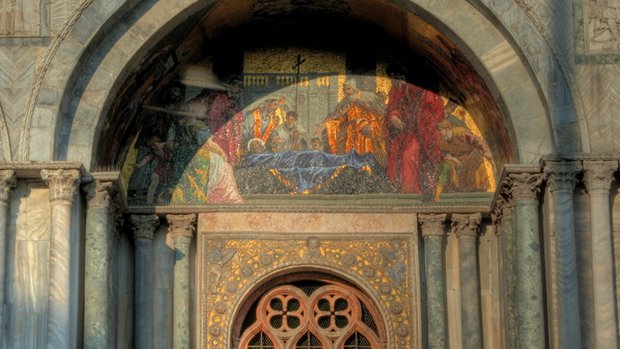
The façade features Byzantine, Romanesque, and Gothic elements. It is divided into two halves by a balcony, in the center of which stand the four bronze horses (Greek art from the 3rd century B.C., originally from the hippodrome of Byzantium, looted by Napoleon, and returned at the Habsburgs' instigation). The facade is clad on the sides with multicolored marble slabs.
The interior of the cathedral is built on a Greek cross plan: a transept, three aisles, and five domes, a raised presbytery, and galleries at half the height of the aisles. Due to the subsidence of the foundations, the floor is undulating and uneven, which certainly contributes to the typical Venetian charm (albeit much to the chagrin of the restorers).
St. Mark's Basilica Hours
|
Open |
9:30 a.m. (Sundays and holidays from 2:00 p.m.) to 5:15 p.m. |
|
Last admission |
4:45 p.m. |
|
Tickets |
€3; free for children under 6 |
|
Optional |
Visit to the Pala d'Oro (additional fee: €5, free for children under 6) Museum (Loggia dei Cavalli) Additional fee: €7, free for children under 6. |
|
Sunday morning |
9:30 a.m. to 2:00 p.m. Museum (Loggia dei Cavalli) only |
|
Covid Info |
Due to current Covid regulations, tickets on Saturday and Sunday can only be purchased at the San Basso ticket office (Piazzetta dei Leoncini). |
|
Campanile |
Open daily from 10:00 a.m. to 7:30 p.m. (last admission: 7:00 p.m.) Ticket: €10, free for children under 6). In case of adverse weather conditions (fog, strong winds, extreme cold), the bell tower will be closed. |
|
Website |
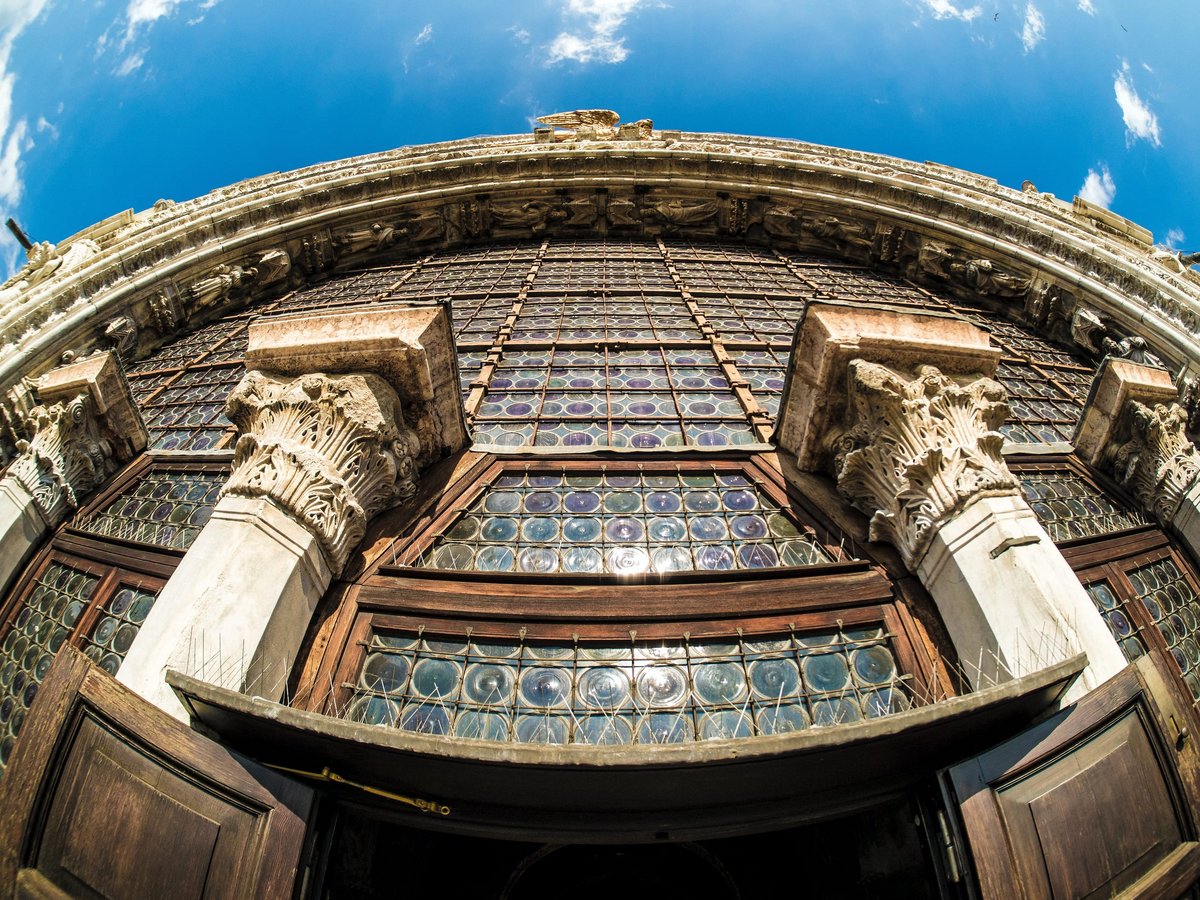
A view looking up from the basilica's balcony.
The most interesting part of the church is undoubtedly the presbytery, where the high altar with the tomb of St. Mark is located. The Pala d'Oro, mounted on a rotating axis, closes off the altar from the rear.
It is a masterpiece of 14th-century Venetian goldsmithing (3.48 x 1.40 m). It is inlaid with many precious stones, and 80 enamel panels depict the most important church feasts, angels, the apostles, and prophets, grouped around a central section featuring Christ in blessing, surrounded by the four evangelists.
The mosaics inside cover an area of 8,000 square meters. It took 700 years to complete them.