
The Doge's Palace served as the residence of the Doge, housing his private chambers. It was also the seat of government, featuring administrative offices and a court of law, with the state prisons located in the attic (piombi) and on the ground floor (bozzi) of the Most Serene Republic, the Serenissima.
Construction of the current building began in the 14th century. Its Gothic exterior defies all the basic rules of architecture, as the lighter, airier part - the portico and colonnade - seems to grow out of the ground, lifting and supporting the heavier part, the walls.
The Doge's Palace is now a museum. Here, alongside the rather austere lead chambers where Casanova once languished (and escaped), you can admire the palace's impressive splendor and sense the former grandeur of the Serenissima.
Doge's Palace Hours
|
Address |
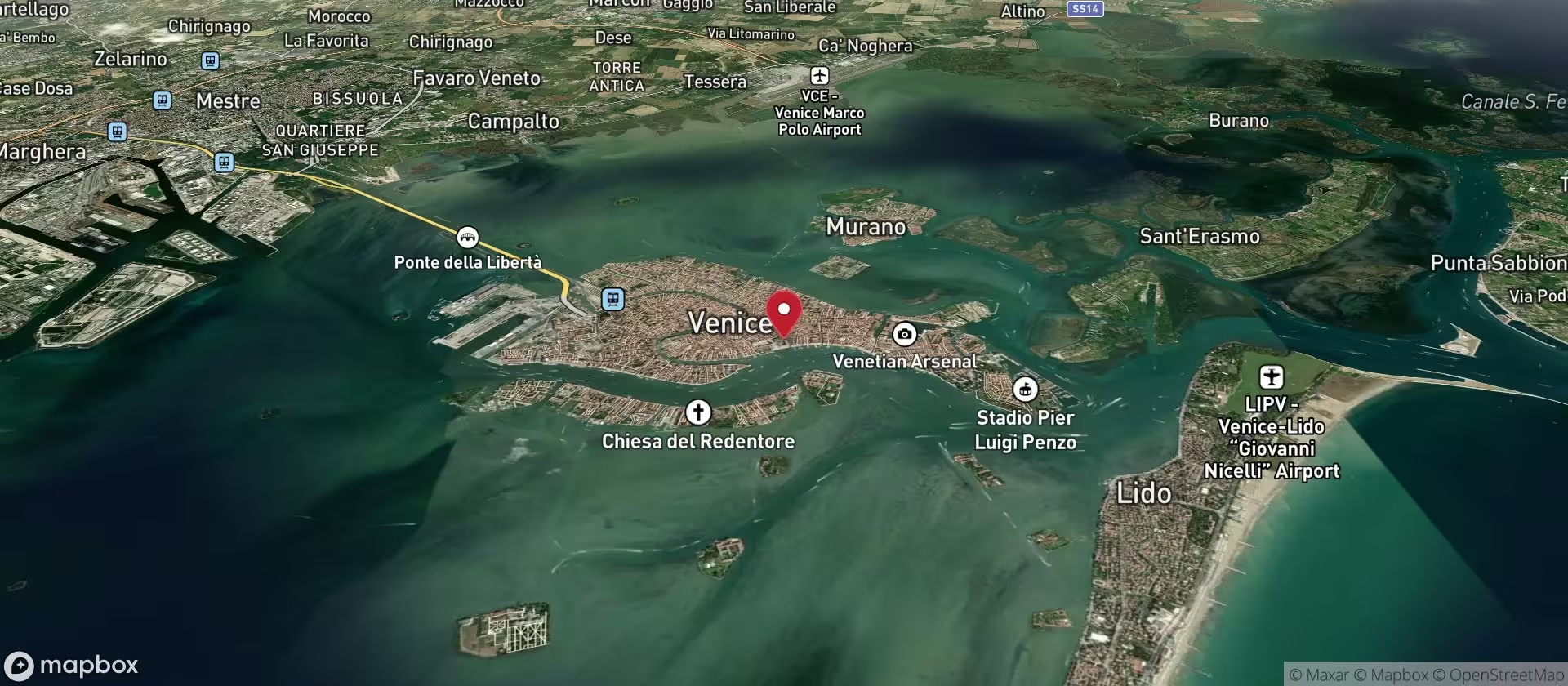
Doge's Palace , San Marco 1 , 30124 Venice |
|
Open |
Daily 10:00 AM – 6:00 PM |
|
Last admission |
5:00 PM |
|
Admission |
€25, reduced rate €13 (as of 06/21) . For schools, €5.50 per person. |
|
Audio Guide |
€5 |
|
Phone |
|
|
Accessibility |
The elevator and restrooms are fully accessible. The secret passages, prison cells, and armory are not. |
|
www |
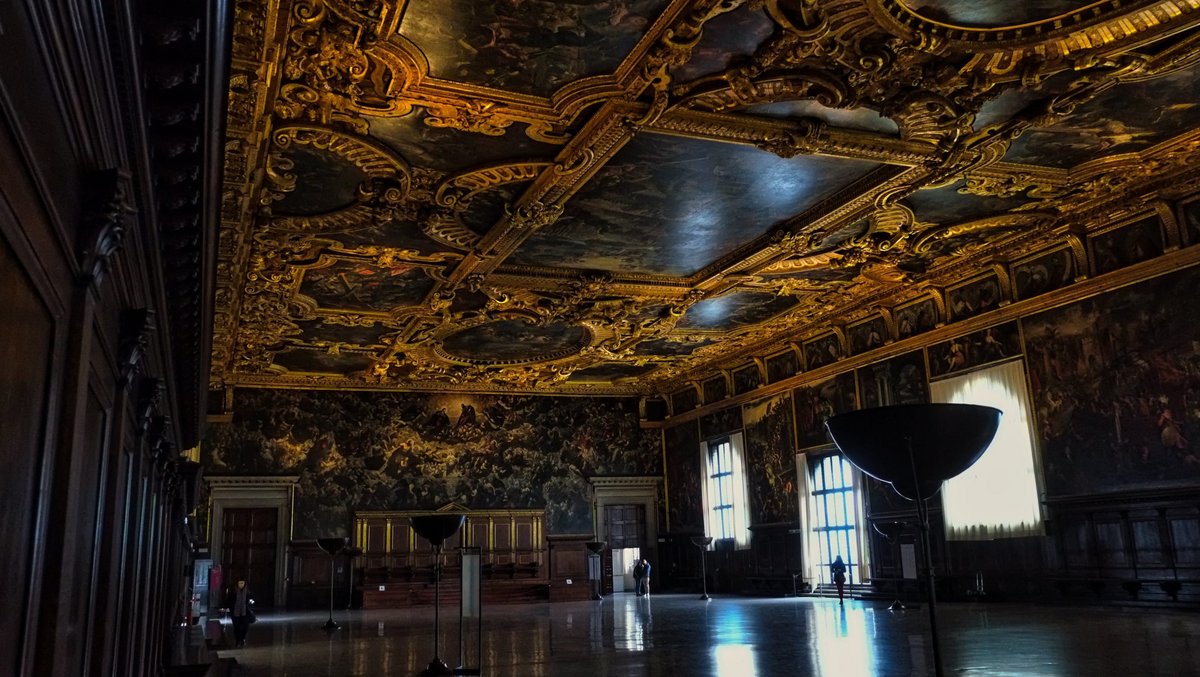
Hall of the Great Council, 53 x 25 m. This imposing room (Sala del Maggior Consiglio) was where the Great Council, the most important political body of the Venetian Republic, held its sessions. It is decorated with works by the most famous artists of the time. Among them is the longest of all the paintings: Jacopo Tintoretto's Paradiso, which he painted between 1588 and 1592.
The Grand Council, the most important political body of the Venetian Republic, met in this imposing hall (Sala del Maggior Consiglio). It is decorated with works by the most famous artists of the time, including the longest painting of all: *Paradiso* by Jacopo Tintoretto, which he painted between 1588 and 1592.