
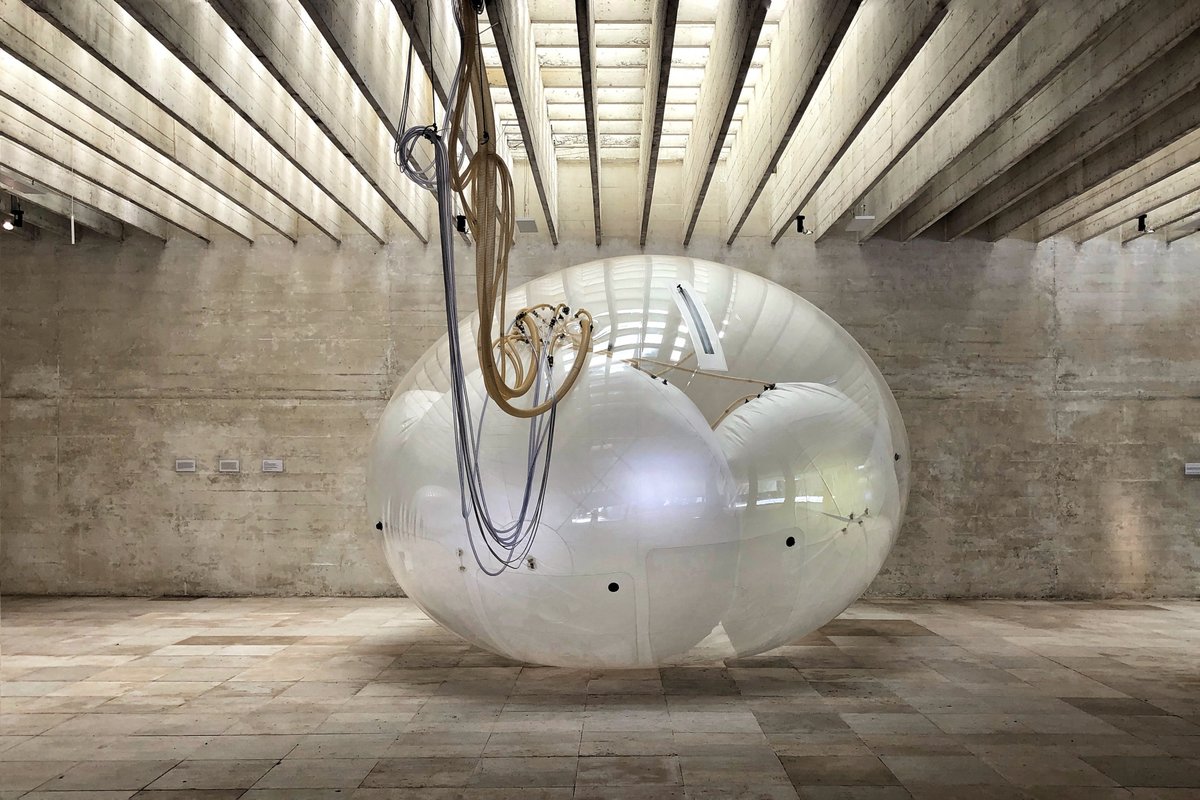
That must have been an odd-numbered year.
Thus, in 1894, the Palazzo dell'Esposizione was built; Umberto I and Margherita di Savoia graced the opening with their presence, and the entire event was a resounding success - so much so that future Biennales gradually began to model themselves on the concept of the World's Fair.
In 1907, the first national pavilion, designed by Léon Sneyers, opened in the Giardini Pubblici:
Belgium presented itself (featuring, among other things, paintings by Klimt as well as retrospectives of Renoir and Courbet).
Before World War I, Hungary, Germany, Great Britain (1909), France (1912), and Russia (1914) followed suit.
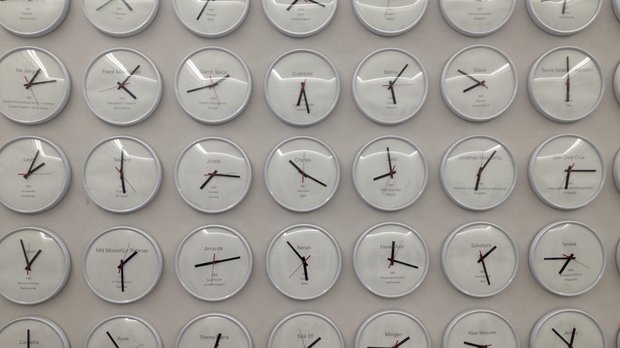
This was followed by other events in the wake of the original festival, such as the International Festival of Contemporary Music (first held in 1930, annually since 1937) and the Venice Film Festival on the Lido (first held in 1930 on the terrace of the Hotel Excelsior on the Lido of Venice - though the Golden Lion was not awarded until later, annually since 1963), the Architecture Biennale, and the Dance Festival.
|
Even-numbered years |
Architecture |
|
|
Odd-numbered years |
Art! |
|
|
Homepage |
Labiennale.org/ | |
|
Special tours |
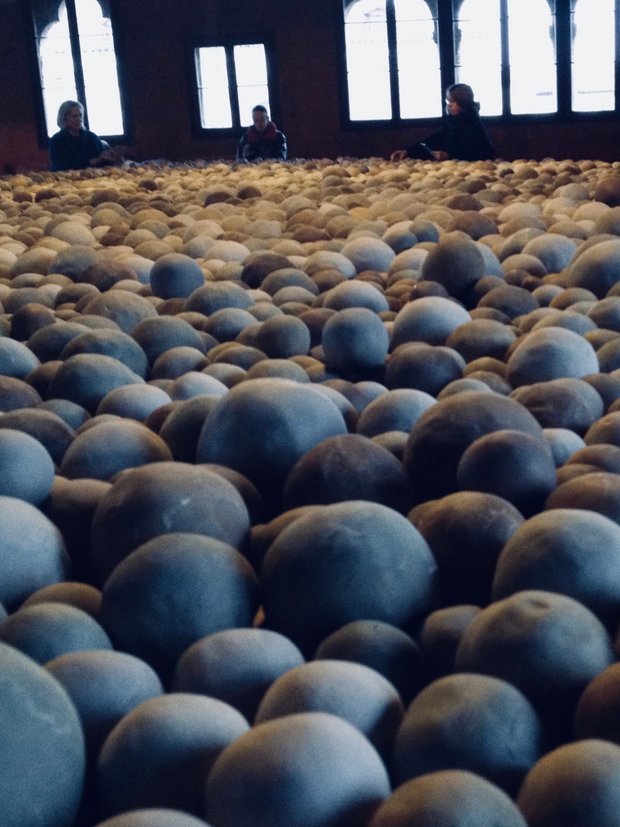
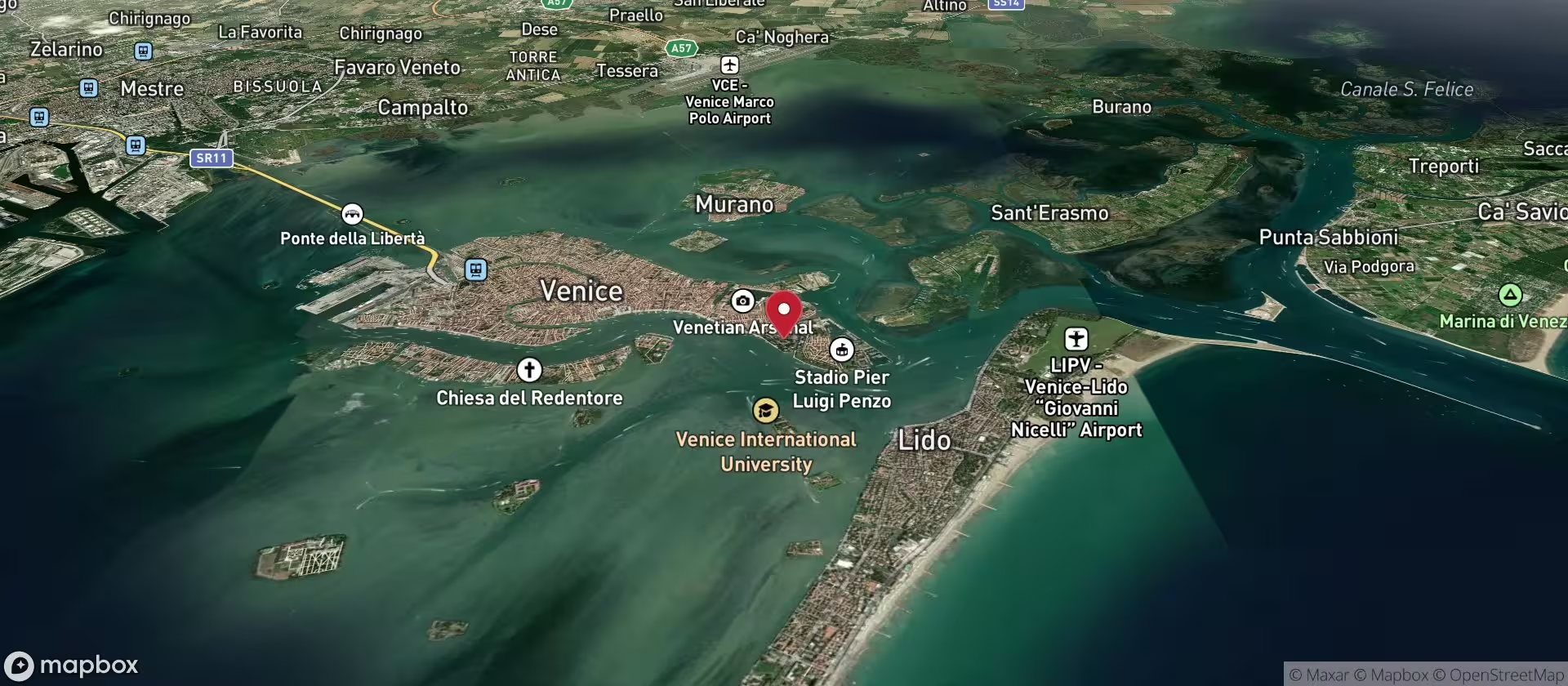
As part of the 48th Biennale (1999), a major restoration project was launched for the Arsenale (Venice's shipyards), which made it possible to carry out extensive repairs. Since then, the site has also been used for the Biennale, including for large-scale video installations.
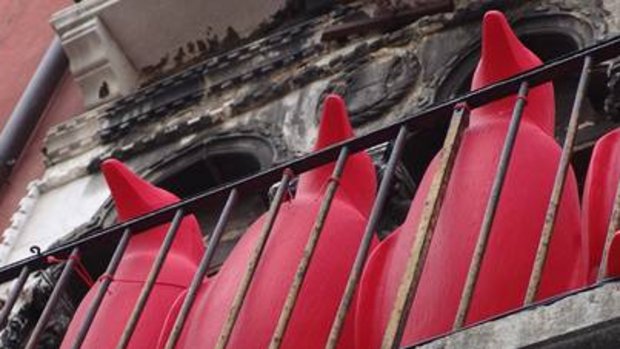
However, the Biennale is not strictly limited to the Giardini. A few years ago, for example, vast numbers of red penguins were scattered throughout the city in the most unlikely places, and the numerous museums are also happy to take up the theme.